Modern businesses are moving toward connected ecosystems where machines, devices, and software systems work together to improve efficiency. Traditional manufacturing environments often depend on manual monitoring and disconnected systems, making it difficult to access real-time information.
This is where IoT software development plays an important role. By connecting machines, sensors, and business applications, IoT solutions help organizations collect valuable data and convert it into actionable insights.
Industries such as manufacturing, engineering, healthcare, logistics, and energy are adopting industrial IoT solutions to improve productivity, reduce downtime, and create smarter operations.
What Is IoT Software Development?
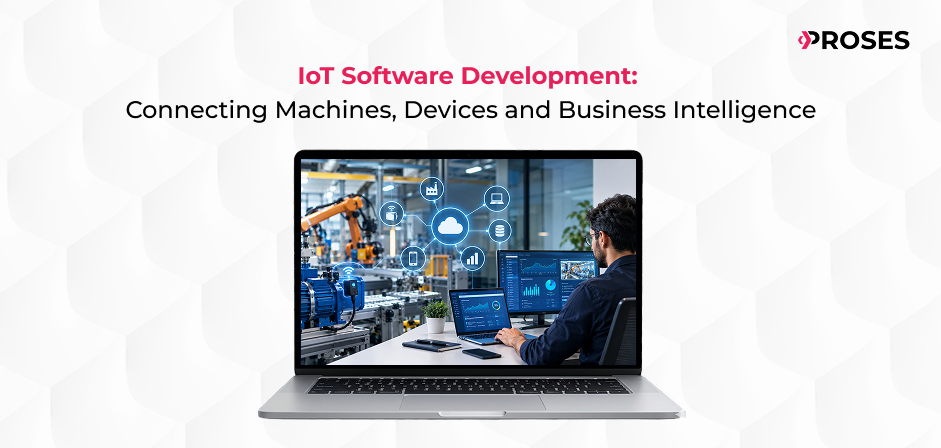
IoT software development involves creating software solutions that connect physical devices, machines, and sensors with digital platforms.
These systems collect data from connected devices and allow businesses to monitor, analyze, and manage operations remotely.
A complete IoT ecosystem includes:
Connected Devices
Sensors and machines collect information such as temperature, pressure, performance, and operational status.
IoT Software Platform
The software processes collected data and presents meaningful information through dashboards and applications.
Data Analytics and Business Intelligence
Advanced analytics help businesses identify patterns, improve processes, and make informed decisions.
For example, in manufacturing, IoT-enabled machines can share performance data with monitoring systems, allowing teams to track production efficiency and identify possible issues.
How IoT Software Development Helps Smart Manufacturing
Real-Time Machine Monitoring
Manufacturing companies often operate multiple machines across production facilities. Manual monitoring can lead to delays in identifying performance issues.
IoT software development enables real-time machine monitoring by collecting operational data continuously.
Businesses can track:
- Machine performance
- Production output
- Equipment conditions
- Energy consumption
- Process efficiency
This visibility helps teams respond faster and maintain consistent production quality.
Predictive Maintenance Through IoT
Unexpected equipment failure can result in production delays and increased maintenance costs.
IoT systems collect machine data and analyze performance patterns to identify possible maintenance requirements.
Instead of waiting for a breakdown, companies can schedule maintenance activities at the right time.
Benefits include:
- Reduced machine downtime
- Better equipment reliability
- Improved maintenance planning
- Longer machine lifespan
IoT Software Development and Business Intelligence
Turning Machine Data Into Business Insights
Machines generate large amounts of data every day. However, raw data alone does not create value.
IoT software platforms help transform this information into useful business intelligence.
Companies can understand:
- Production trends
- Operational challenges
- Resource utilization
- Performance improvements
These insights help decision-makers optimize processes and improve business outcomes.
Key Applications of IoT in Manufacturing
Smart Factory Automation
IoT connects machines, software systems, and employees to create a more efficient production environment.
Connected factories can monitor processes automatically and provide real-time updates.
Quality Monitoring
IoT sensors can help monitor production conditions and identify variations that may affect product quality.
This supports better quality control and reduces manufacturing errors.
Asset Tracking
Businesses can track equipment location, usage, and performance through connected systems.
This is useful for industries managing multiple machines and industrial assets.
Why Businesses Need IoT Software Development in 2026
Improved Operational Visibility
Connected systems provide businesses with accurate information about their operations.
Instead of depending on manual reports, teams can access real-time dashboards and analytics.
Better Decision Making
IoT data combined with business intelligence allows companies to make decisions based on actual operational performance.
This reduces uncertainty and improves planning.
Increased Efficiency
Automation reduces repetitive monitoring tasks and helps employees focus on higher-value activities.
IoT solutions support faster workflows and improved resource management.
IoT and the Future of Industrial Automation
The future of industrial automation will depend on the combination of IoT, artificial intelligence, and advanced software solutions.
Connected machines will not only collect data but also help businesses understand performance, predict issues, and improve operations.
For precision engineering industries, IoT integration can support better machine monitoring, process control, and production efficiency.
Advanced manufacturing environments, including industries using specialized equipment such as CVD diamond machines, can benefit from connected systems that improve visibility and operational management.
Conclusion: Building Smarter Businesses With IoT Software Development
IoT software development is transforming the way businesses connect machines, devices, and information.
By combining connected technology with business intelligence, companies can achieve better monitoring, improved efficiency, and smarter decision-making.
As industries continue adopting Industry 4.0 technologies, IoT-enabled solutions will become an essential part of modern manufacturing and industrial automation.
Businesses that invest in connected systems today can build more flexible, efficient, and future-ready operations.
Build Smarter Operations With IoT Solutions
Connect your machines, devices, and business systems with intelligent IoT software designed to improve efficiency, monitoring, and decision-making.
Talk to Proses experts today and explore your IoT transformation opportunities.
FAQs
What is IoT software development?
IoT software development involves creating applications and platforms that connect machines, sensors, and devices. These solutions collect data, analyze information, and help businesses monitor and improve their operations
How is IoT used in manufacturing?
IoT is used in manufacturing for machine monitoring, predictive maintenance, quality control, asset tracking, and production optimization. It helps manufacturers improve efficiency by providing real time operational insights.
What are the benefits of industrial IoT solutions?
Industrial IoT solutions help reduce downtime, improve machine performance, optimize resources, and support better decision making. They allow businesses to monitor operations and identify improvement opportunities.
Can IoT software connect with existing machines?
Yes, IoT software can often integrate with existing industrial machines using sensors, gateways, and communication technologies. This allows businesses to collect machine data without completely replacing existing equipment.
How does IoT support smart manufacturing?
IoT supports smart manufacturing by connecting machines, software systems, and data analytics platforms. It creates a connected production environment where businesses can monitor processes and improve operational efficiency.